
SpaceX is Already DEAD.. That Was Fast
I hate to say I told you so, but I told you so. SpaceX is down 46% from its peak, and many of you own it without knowing.
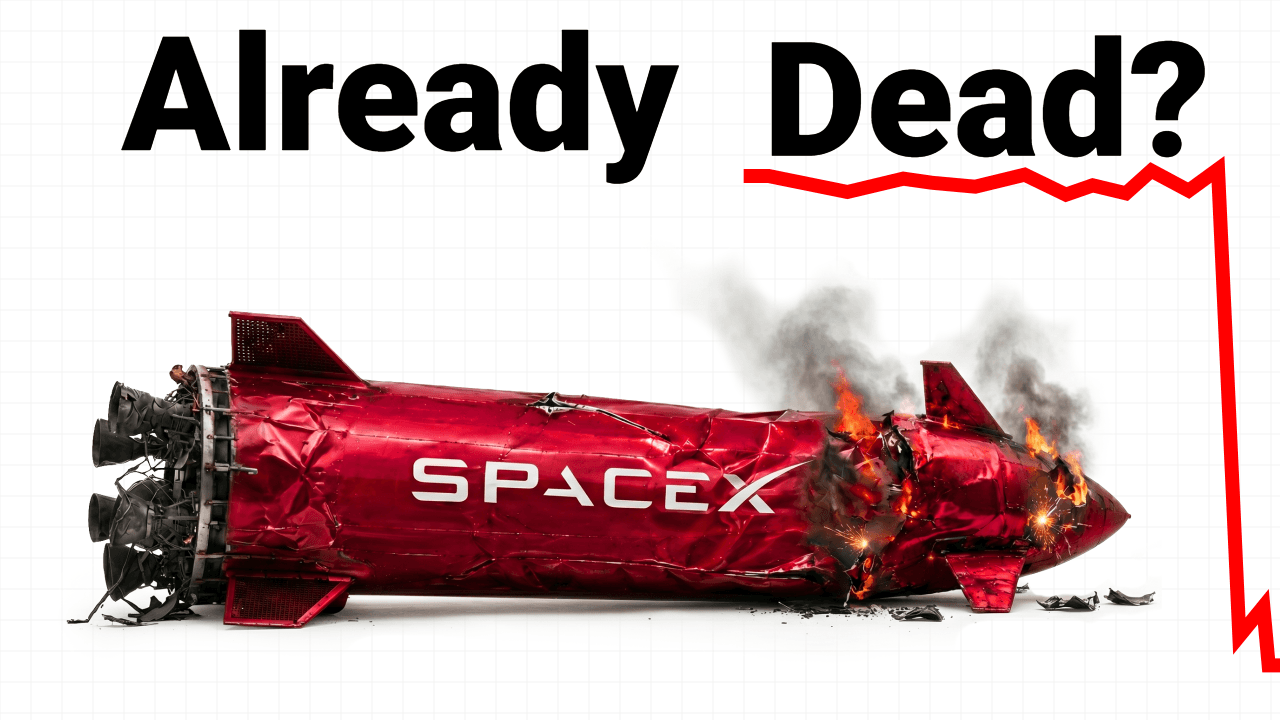
I hate to say I told you so… But I told you so.
SpaceX has become an absolute joke. It's down 46% from its peak and many of you own it without even knowing you own it.
If you have a workplace pension, a Nasdaq 100 tracker or a target date fund you almost certainly own this massive pile of crap totally legit stock.
And in 3 weeks, $123 billion of new stock is about to flood the market.
New supply means index funds are forced to buy more shares. When the available shares increase, the fund has to buy more to keep tracking the index correctly.
So as SpaceX unlocks more shares, you'll automatically hold more SpaceX.
The stock has fallen 9 of the last 10 sessions and your position in it is about to grow without your choice.
By the end of this newsletter you'll know how this happened, why it will get worse in the next 3 months and the 3 moves I'd make to protect my money.
How SpaceX Got Into Your Portfolio
On May 1st Nasdaq changed its index rules.
Typically, companies needed 3 months of trading history and 10% of its shares available to buy before entering the Nasdaq 100.
The new rule cut the wait to 15 trading days and removed the share requirement for large companies.
6 weeks later SpaceX listed with less than 5% of the company available to trade.
15 trading days later it entered the Nasdaq 100.
The fastest index entry in American history.
Every fund tracking the index sold pieces of Apple, Microsoft, Nvidia, Amazon and Alphabet to make room for SpaceX. If you hold one of those funds, that trade happened inside your account without your permission.
Please note: S&P reviewed the same idea in June and rejected it. Their reason was that company size alone doesn't justify skipping the rules. SpaceX can't enter the S&P 500 because it lost $4.94 billion last year and their index requires profitability.
Which is why Tesla took 10 years to qualify.
One index provider stuck to their rules but the Nasdaq didn't.
But What Do You Actually Own?
"But SpaceX is a good company right?"
SpaceX made $18.67 billion in revenue last year, growing 33%.
Sounds good on the surface but the company has a net loss of $4.94 billion.
Starlink is the strong part of the business with $11.4 billion revenue, $4.4 billion operating profit, 39% margins and 12 million subscribers.
The problem is what's attached to it. In February, xAI merged into SpaceX.
xAI lost $6.4 billion last year on $3.2 billion of revenue.
So Starlink earns $4.4 billion in profit but the AI division burns through all of it.
Meanwhile, Goldman Sachs predicts AI will be 68% of SpaceX revenue by 2030.
Retail think they're buying a "fast growth" rocket company and getting an "unprofitable" AI company with a rocket division.
Also let's face it, Grok is the creepy uncle of the flagship AI companies.
The $123 Billion Problem
Only 5% of SpaceX trades on the open market. The other 95% is locked up by insiders and employees who weren't allowed to sell at IPO.
2 trading days after SpaceX reports its first earnings, 911.5 million of those locked shares are released.
At today's price that's $123 billion of stock hitting the market at once.
The biggest IPO in history raised $86 billion, this single unlock is 64% bigger than that.
Then more unlocks will follow every 2 to 4 weeks after.
By late September the tradeable float will be 6 times bigger than today.
Every unlock forces your index fund to buy more SpaceX and invites more selling pressure.
Retail Got Played
Retail investors were given 20% of this IPO whereas normal IPO gives retail a single digit allocation.
Sounds great on the surface until you take a deeper look.
You were forced to hold for a minimum number of days while the corporations sold on the same day.
- Fidelity rules: hold 15 days or receive escalating bans tied to your Social Security number.
- Robinhood: 30 days or a 2 month suspension.
- SoFi: 30 days or a permanent ban on third offence.
Meanwhile, BlackRock and Citadel received shares at the same price on the same day with zero restrictions.
One asset manager told Reuters they received a $300 million allocation with no limits and planned to sell it within 5 days. Their exact words: they were "taking advantage of demand from small investors."
Small investors were locked in watching the stock fall.
This was a retail trap from day 1.
The Bond Market Saw It First
Days after the IPO, SpaceX borrowed $25 billion through bonds.
Within a month those bonds became the worst performing investment grade bonds in the entire dollar market.
SpaceX debt now trades at risk levels worse than junk rated companies, while officially still holding an investment grade rating.
The agencies still haven't downgraded.
When stocks and bonds tell different stories about the same company, the bond market is usually right.
And This Has Happened Before BTW….
On December 7th, 1999 Yahoo joins the S&P 500.
The stock jumped 23.9% in one day. Every index fund in America was forced to buy because a committee added a name to a list.
Yahoo peaked 1 month later then it fell for years.
The forced buying told investors nothing about whether Yahoo was worth owning.
It was a rule being executed by funds with no opinion.
July 7th, 2026 was SpaceX's version of that day.
SpaceX is a real business with real revenue but it's still massively overvalued.
3 Moves to Protect Yourself
1. Please check if you actually hold this crap
Every fund provider has a holdings page.
Takes 2 minutes to read it.
Search your pension fund's name plus "holdings" and look at the top 10.
Check how much is AI and check if SpaceX is there.
2. Understand your concentration while you're at it
The top 10 companies in the S&P 500 are now 40% of the entire index. The highest since the 1960s.
At the dotcom peak it was 27%.
When an index is this top heavy, one bad earnings report moves your whole pension. You see the beauty of the S&P 500 is your risk is diversified across 500 companies.
But today the concentration risk is so high that your risk is mostly concentrated in 10 companies.
Most of which are AI companies. So if the AI bubble pops, the S&P gets wiped out. And this is true of the NASDAQ also.
So while the S&P does not include SpaceX, it still has concentrated AI risk.
3. Decide your SpaceX exposure.
If you're in a Nasdaq 100 fund your SPCX position will grow automatically over the next 3 months.
Your options: switch to an S&P 500 fund where SpaceX doesn't qualify (but there is still high concentration risk), move some money into an equal weight index fund where no single stock dominates, hold more cash until the unlocks finish.
I'm personally heavy in cash these days and I've moved much of my exposure outside of the US to ETFs like World Ex-US and indices like the WIG in Poland.
Most people can't show me their portfolio because they've never looked inside it.
Don't Fall for the Hype
SpaceX is just another one in the long line of market rugs. Gold, silver and defensive stocks might be boring but at least they don't do this.
And for anybody who is about to say "But Silver is down 50%"… yeah but it went up 250% first, SpaceX didn't.
Get the next one
One newsletter a week. No hype, no crypto, no leverage.